Amazon
 Flipkart
 Azista
18 Mar, 2026
30 Apr, 2026
25 Apr, 2026
20 Apr, 2026
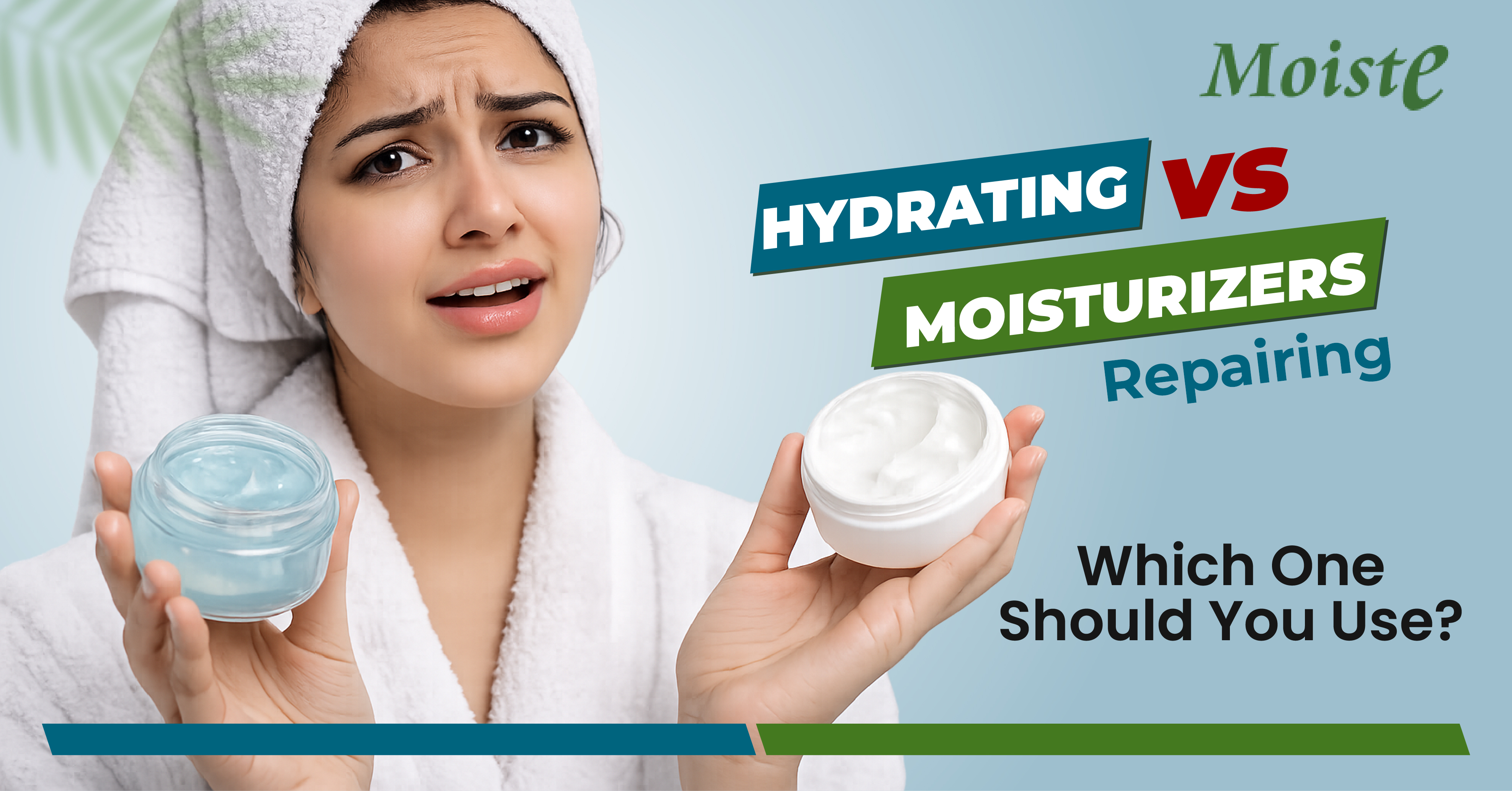
Choosing the right moisturizer isn't just about texture or price-it's about understanding what your skin actually needs. One of the most common skincare questions is the difference between hydrating moisturizers and repairing moisturizers, and when to use each.
Let's break it down in a simple, skin-friendly way.
A hydrating moisturizer focuses on increasing the skin's water content and preventing moisture loss. It's ideal when your skin feels dull, tight, or lacks softness-but isn't damaged.
Lightweight lotions like Moiste Lotion work well here, as they help retain moisture while supporting the skin barrier with ingredients such as squalane and ceramides.
A repairing moisturizer is designed to strengthen and restore the skin's protective barrier. This is essential when your skin is compromised due to dryness, over-exfoliation, weather exposure, or sensitivity.
Cream-based formulas enriched with ceramides, shea butter, and wheat germ oil help nourish the skin deeply and restore comfort.
| Feature | Hydrating Moisturizer | Repairing Moisturizer |
|---|---|---|
| Primary Function | Adds & retains moisture | Repairs skin barrier |
| Texture | Lightweight, fast-absorbing | Richer, more nourishing |
| Ideal Skin Type | Normal, oily, dehydrated | Dry, sensitive, damaged |
| Usage Time | Morning / daytime | Night-time or cold weather |
These ingredients work together to improve hydration or repair depending on your skin's needs.
Choose a hydrating moisturizer if
Choose a repairing moisturizer if
Pro tip: Many people benefit from using both-a hydrating lotion during the day and a repairing cream at night.
This balanced approach helps maintain hydration while strengthening the skin barrier long-term.
Can I use both a hydrating and repairing moisturizer together?
Yes. You can use a hydrating moisturizer during the day to maintain moisture levels and a repairing moisturizer at night to support skin barrier repair and recovery.
How do I know if my skin needs hydration or repair?
If your skin feels tight or dull but not flaky, it likely needs hydration. If your skin feels rough, irritated, or flaky, you may need a repairing moisturizer to restore the skin barrier.
Is a repairing moisturizer suitable for daily use?
Yes, especially during winter or if your skin is dry or sensitive. However, in humid weather or for oily skin, it's better to use a lightweight hydrating moisturizer during the day.
Do hydrating moisturizers help repair the skin barrier?
Hydrating moisturizers help maintain moisture but may not be enough for damaged skin. For effective skin barrier repair, look for ingredients like ceramides, shea butter, and wheat germ oil found in repairing formulas.
Should men and women use different moisturizers?
No. Skin needs are the same regardless of gender. Both men and women should choose between hydrating vs repairing moisturizers based on skin condition, climate, and routine.
Understanding the difference between hydrating vs repairing moisturizers helps you make smarter skincare choices. When you match the right formula to your skin's condition-not just its type-you'll see healthier, more comfortable skin over time.

Explore
News Letter Subscription
Copyright © All Rights Reserved by Hetero Healthcare Limited