Amazon
 Flipkart
 Azista
22 Mar, 2026
30 Apr, 2026
25 Apr, 2026
20 Apr, 2026
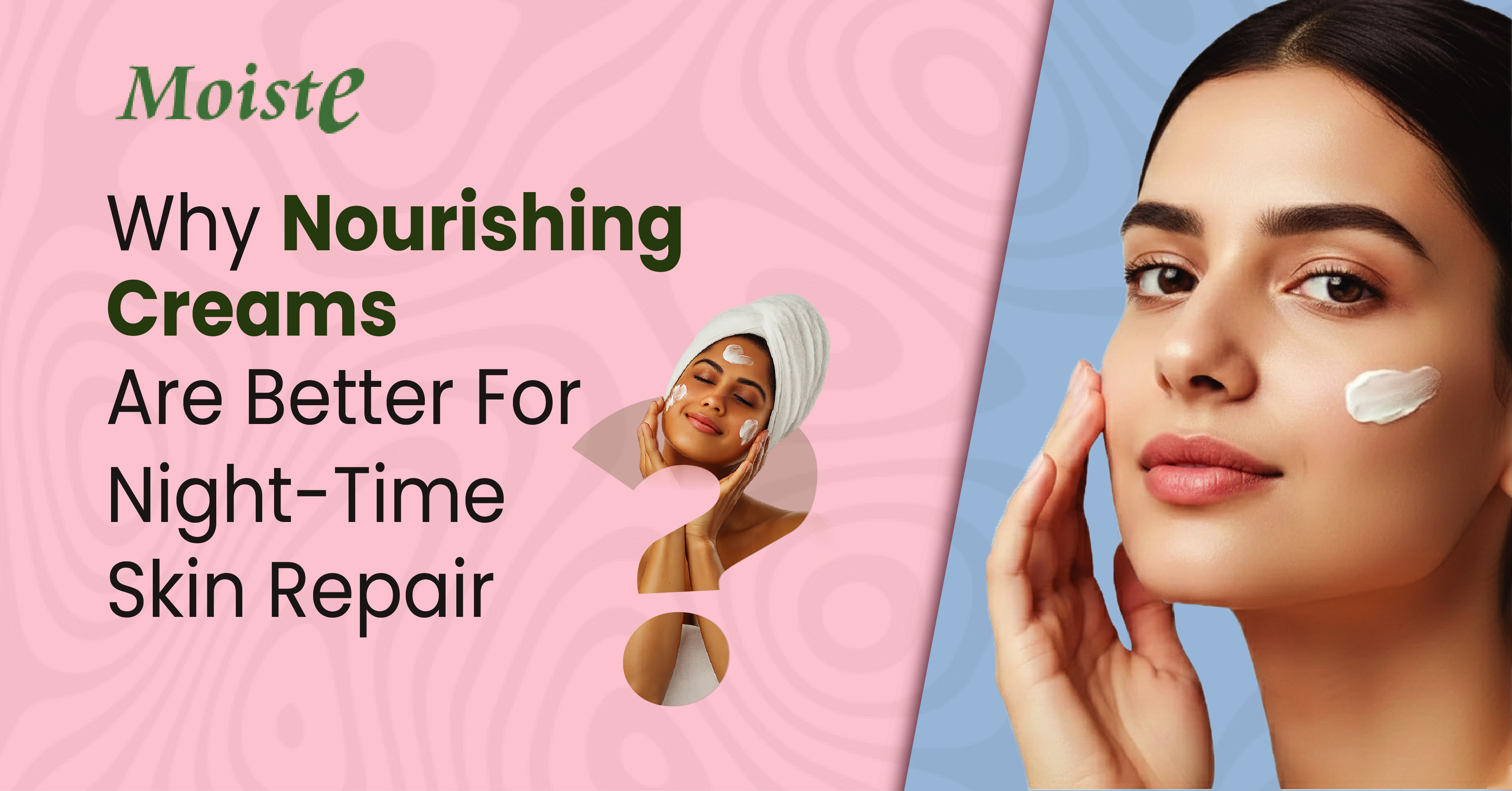
Your skin works hardest while you sleep. During the night, the skin enters repair mode - recovering from daily stress, pollution exposure, moisture loss and barrier damage. This is why using nourishing creams at night is more effective than lightweight daytime moisturisers.
However, skincare products alone are not enough. Getting 6-8 hours of quality sleep is essential to allow the skin's natural repair processes to function properly. During deep sleep, cell regeneration increases, the skin barrier rebuilds, and moisture balance is restored. Inconsistent or insufficient sleep can slow this process, meaning even the best night-time nourishing cream may not deliver optimal results.
A well-formulated nourishing night cream supports skin repair, improves hydration retention and strengthens the skin barrier - helping you wake up with softer, healthier-looking skin when paired with adequate rest.
At night, your skin:
This makes night the ideal time to use rich, nourishing moisturizers that focus on repair rather than surface hydration.
Nourishing creams are richer moisturizers designed to:
Unlike lightweight lotions, these creams contain lipid-rich ingredients that stay on the skin longer, making them ideal for night-time skin repair.
| Feature | Nourishing Creams | Lightweight Moisturizers |
|---|---|---|
| Texture | Rich and creamy | Light, fast-absorbing |
| Best Time to Use | Night | Day |
| Focus | Skin repair and nourishment | Surface hydration |
| Ideal For | Dry, damaged, or tired skin | Normal to oily skin |
For overnight use, nourishing creams provide longer-lasting hydration and better barrier support.
At night, the skin repairs its protective barrier. Ingredients like Ceramide III help rebuild this barrier, reducing moisture loss and improving skin resilience.
This is why ceramide-based lotions are ideal for recovery.
Night creams often contain emollients and occlusives that prevent moisture from evaporating while you sleep. Ingredients such as squalane and shea butter help seal hydration and keep skin supple till morning.
Skin elasticity improves with consistent nourishment. Ingredients like wheat germ oil (Vitamin E) provide antioxidants and support skin regeneration overnight.
Regular use of a nourishing night cream helps reduce roughness and dryness.
| Ingredient | Skin Benefit |
|---|---|
| Ceramide III | Strengthens the skin barrier |
| Squalane | Locks in moisture without heaviness |
| Shea Butter | Deep nourishment and improved elasticity |
| Wheat Germ Oil | Antioxidant support and skin repair |
Nourishing creams that combine these ingredients-like thoughtfully formulated options from Moiste-are designed to support overnight skin recovery without irritation.
Even combination skin can benefit from night-only nourishing creams.
Using the right night cream for skin repair enhances results without overloading the skin.
Avoiding these mistakes ensures better overnight skin repair.
Yes. Nourishing creams are designed for nightly use, especially for dry or stressed skin.
Not if formulated correctly. Ingredients like squalane nourish without clogging pores when used at night.
Yes. Creams provide deeper hydration and better skin barrier repair compared to lotions.
Yes, but in moderate amounts. Night-time nourishment helps balance oil production.
With regular use, improved softness and hydration can be noticed within 1-2 weeks.
Night-time is when your skin heals and restores itself. Using nourishing creams at night helps strengthen the skin barrier, lock in moisture, and support natural repair processes.
Well-balanced formulations-such as nourishing creams from Moiste-are created to work with your skin's overnight cycle, offering comfort, repair, and long-lasting hydration without feeling heavy.

Explore
News Letter Subscription
Copyright © All Rights Reserved by Hetero Healthcare Limited